The video linked below is located on YouTube.
Tai Chi, The Pyramid View of the Body, and Grounding
[youtube=http://www.youtube.com/watch?v=AcqoGL5OiuE]
A web page duplicate of the video is also provided for those who prefer to read, and for more leisurely study.
————————————
This video is about the relationship between Tai Chi, the Pyramid View of the body, and the concept of grounding
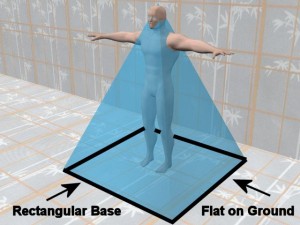
According to Happeh Theory, the shape and function of the human body is influenced by a large pyramid located as shown in this picture.
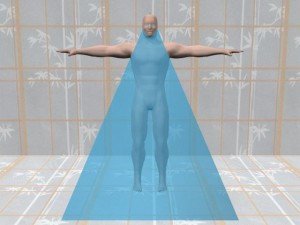
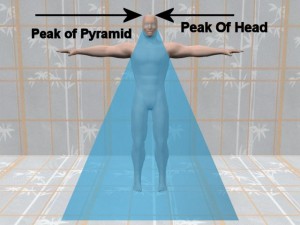
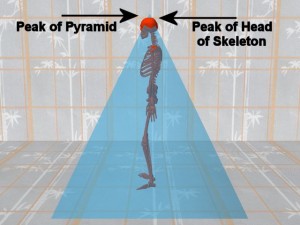
The peak of the pyramid is aligned on the peak of the head.
This ground level picture shows that the base of the pyramid and the feet of the human being both rest on the ground.
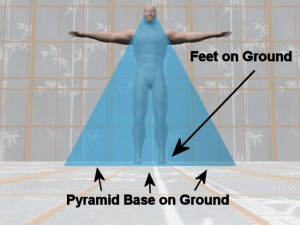
According to Happeh Theory, the purpose of basing the shape and function of the human body on a pyramid, is to provide the human body the opportunity to have the same stability that a pyramid has. A pyramid is an extremely stable structure because the base is a large rectangle resting flat on the ground.
What is the relationship between the Pyramid View of the Human Body and the practice of Tai Chi?
One of the commonly stated goals of all kung fu styles, is to make the student “more grounded”. The words “grounded” and “stability” mean the same thing. The Pyramid View of the body can be used to provide a familiar, and clear way to visualize what the term “grounding” means, and why the practice of Tai Chi can make a person more grounded.
Here is the example picture of the Pyramid View of the Human Body again.
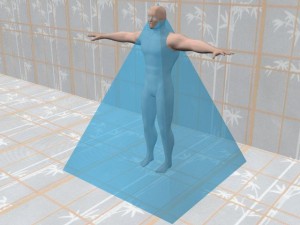
This picture with this specific relationship between the location of the pyramid and the location of the human body will be the base or reference picture of what the Pyramid View of the Human Body should look like.
Here is a picture of a normally standing human skeleton.
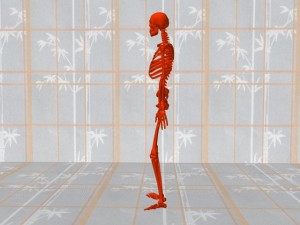
One of the first things that is done in the practice of Tai Chi is to lower the body into the proper stance.
The knees are bent and the pelvis is tucked under as shown in this picture.
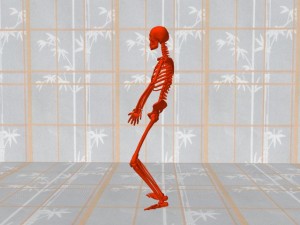
How does lowering the body during the practice of the Tai Chi form affect the pyramid within the human body?
This picture shows how the pyramid looks on the human skeleton.
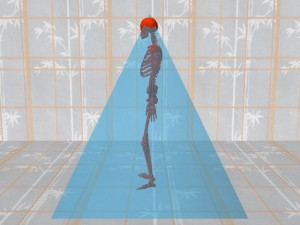
The peak of the pyramid is aligned on the peak of the head of the skeleton in accordance with the definition of the Pyramid View of the Human Body.
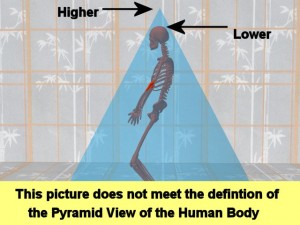
The next picture shows the skeleton after it has been lowered into position to begin the Tai Chi form.
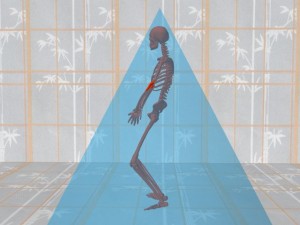
The peak of the pyramid is no longer aligned on the peak of the head of the skeleton.
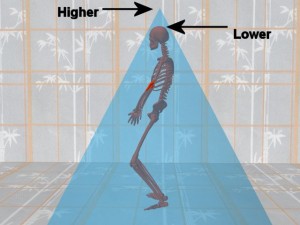
This picture does not meet the definition of the Pyramid View of the Human Body.
In order for this picture to meet the definition of the Pyramid View of the Human Body,
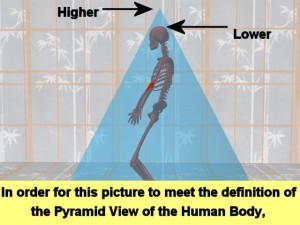
the peak of the pyramid must be lowered so that it is realigned on the peak of the head of the skeleton.
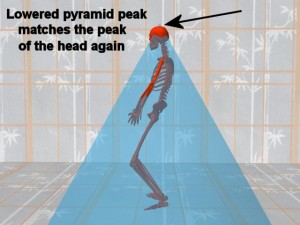
What happens to the rest of the pyramid, if the peak of the pyramid is lowered to realign with the lowered head of the skeleton? The answer to that question depends on how the pyramid is constructed. Either answer can be used to demonstrate why the practice of Tai Chi makes a human being more grounded.
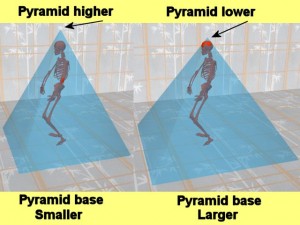
In the first example, the pyramid will be treated as if it is composed of a hard unmoveable material. In this picture, the peak of the pyramid is higher than the peak of the head of the skeleton.
When the peak of this hard pyramid is lowered to realign it with the lowered head of the skeleton, the base of the pyramid would be forced into the ground as shown in this animation.
The explanation for grounding based on the behavior of a hard pyramid, would be that the practice of Tai Chi makes a person more grounded, because the low Tai Chi posture forces the bottom of the pyramid within a person’s body into the ground.
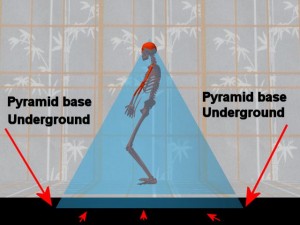
The part of the Pyramid underneath the ground will act like an anchor on the person’s body. The body of the person will be as hard to move as a fence post buried in the dirt.
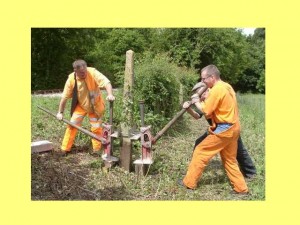
In the second example, the Pyramid will be treated as if it is constructed of a soft and deformable material. In this picture,
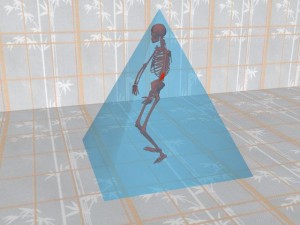
the peak of the pyramid is higher than the peak of the head of the skeleton.When the peak of the soft Pyramid is lowered to realign with the head of the skeleton, the base will spread out and become larger as shown in this animation.
A Pyramid is a strong and stable structure because it has a large rectangular base. One of the properties of a pyramid is that the larger the base, the more stable the pyramid is.
The explanation for grounding based on the behavior of a soft pyramid, would be that the practice of Tai Chi makes a person more grounded, because the lowered Tai Chi posture forces the rectangular base of the pyramid to spread out and become larger, and therefore more stable according to the properties of a pyramid.